
You sit down, adjust your camera, take a deep breath, and say your first "Hey everyone, welcome!" But instead of sounding warm and cozy, your voice bounces off the bare walls, rattles against the windowpane, and echoes back into your mic like you're streaming from inside an empty gymnasium. You instantly wince, wondering if you need to shell out a hundred bucks for those ugly, dark gray foam squares that smell like chemicals.
The good news? You absolutely do not need professional soundproofing panels to sound amazing. In fact, some of the best sound-absorbing materials in the world are already sitting on your bed, folded in your closet, or laying on your floor.
Why your bedroom sounds like an empty gym
Sound is incredibly bouncy. When you speak, sound waves travel out of your mouth and keep going until they hit something. If they hit a hard, flat surface—like drywall, hardwood floors, or bare windows—they bounce right back. This bouncing is what causes that hollow, metallic echo that makes your microphone sound cheap, even if you bought a nice one.
To stop the bounce, you need soft, uneven textures that catch the sound waves and swallow them up. While you are figuring out where to position your desk and microphone to get the best layout, you might also want to read our guide on framing your space: How to stream from your bedroom without losing your privacy so you can keep your personal life off-camera while setting up your new sound system.
The magic of blankets and open closets
The easiest way to stop echo is to look at what is directly in front of you and directly behind you. When you speak, your voice travels straight ahead, hits the wall behind your computer, and bounces right back into the front of your mic.
Try taking a thick, heavy blanket—like a comforter, a duvet, or even a couple of bath towels—and draping them over the wall or a bookcase right behind your monitor. If you have a closet with sliding or folding doors right behind your desk, open them up. A closet full of hanging clothes is literally the ultimate sound absorber. It acts like a giant, fluffy sponge for your voice.
You don't need a professional recording studio to sound like a warm, comforting friend; you just need to stop your voice from bouncing.
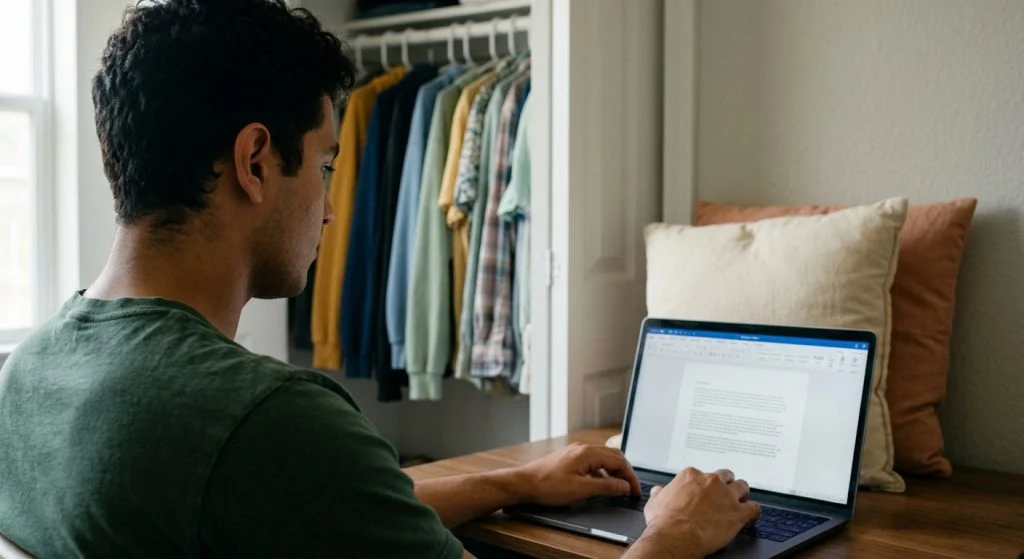
Softening your direct line of sight
If you still hear a tiny bit of echo, look down and look up. Hardwood floors are beautiful, but they are acoustic nightmares. Throwing down a thick area rug right under your desk chair can instantly warm up your audio tone. Even a small, cheap bath mat placed directly under your microphone on your desk can stop sound waves from reflecting off the hard wood of your tabletop.
Another great trick is to take two fluffy bed pillows and prop them up vertically on either side of your microphone, just out of the camera's view. This creates a mini, makeshift "vocal booth" that catches the sound traveling out of the sides of your mouth.
As a bonus, these soft, sound-absorbing layers also do wonders if They're in the Next Room: How to Stream Quietly Without Waking the House because they soak up your voice before it can vibrate through the drywall and wake up your roommates or family. You get a richer, closer sound, and they get a peaceful night's sleep. It's a win-win for everyone, and it didn't cost you a single dime.