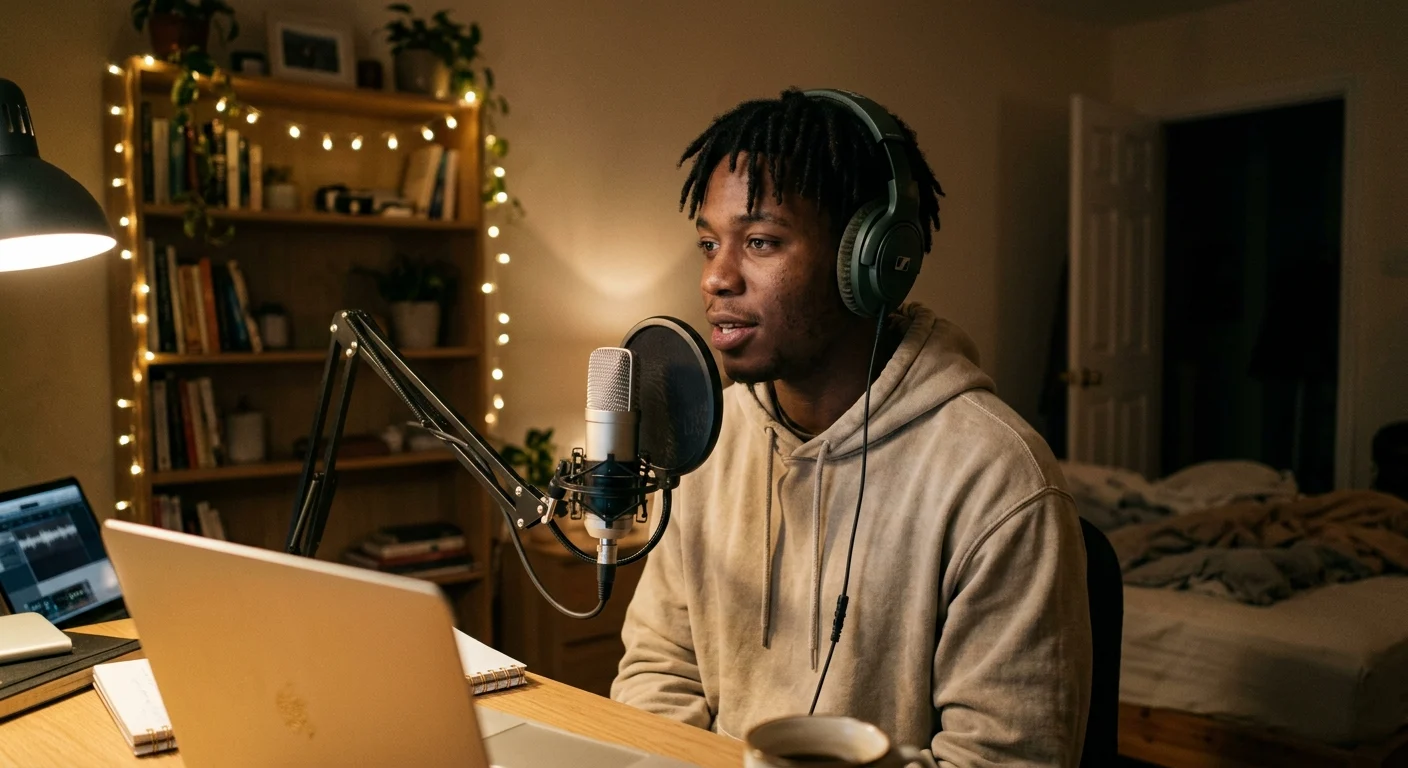
It is 11:30 PM. The house is completely dark, and you can hear the rhythmic hum of the refrigerator down the hall. Your roommates, your kids, or your parents are fast asleep, but you have got that late-night spark—you want to go live and chat with your community. You reach for the start button, but then a cold wave of anxiety hits. What if you laugh too loud? What if your voice carries through the thin drywall and wakes up the whole house?
We have all been there. Trying to host a lively stream while essentially whispering feels like trying to do stand-up comedy in a library. But here is the secret: you do not have to shout to be engaging. In fact, some of the best, most tight-knit streaming communities are built in the quiet hours of the night. With a few simple audio tweaks and a change in mindset, you can turn your quiet environment into your biggest strength.
The Secret is in the Mic (Not Your Lungs)
The biggest mistake quiet streamers make is sitting far away from their microphone and trying to project. When you do that, you have to turn your microphone’s sensitivity (or gain) way up. Suddenly, your mic is picking up your breathing, the hum of your computer fan, and the creak of your chair—but your voice still sounds distant.
Instead, pull that microphone close. We are talking two to three inches from your mouth. When you are that close, you can turn your microphone gain way down. Because the mic is right next to your lips, it will capture the deep, warm, rich tones of your natural speaking voice—even if you are barely speaking above a whisper—while completely ignoring the background hum of the room. If you are worried about popping P-sounds, angle the mic slightly to the side of your mouth rather than pointing it directly at your lips.
A quiet stream isn't about hiding; it's an invitation into a quieter, cozier room.
Embrace the Midnight Vibe
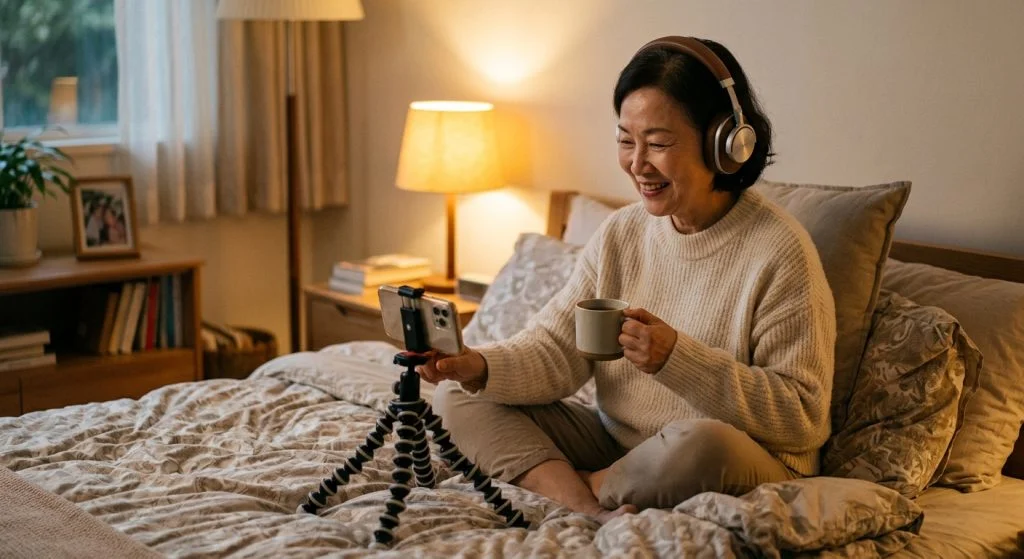
If you are streaming at midnight, do not try to match the high-energy hype of a midday broadcast. Lean into the quiet. Tell your chat that it is a 'low-volume stream' and invite them to grab a cup of tea, wrap themselves in a blanket, and wind down with you. It instantly changes the relationship from performer-and-audience to a group of friends hanging out late at night.
If you are feeling too tired to put on a big show anyway, this style of streaming is actually a perfect fit. You can read more about keeping things low-key in our guide on The Zero-Energy Stream: Going Live When You’re Exhausted But Still Want to Hang Out. Since you are keeping things intimate, you will also want to make sure your physical setup matches the cozy energy without sacrificing your personal space. For some quick tips on setting up, check out Framing your space: How to stream from your bedroom without losing your privacy.
Quick and Easy Sound Dampening
You do not need to spend hundreds of dollars on acoustic foam to keep the sound from traveling through your walls. Real-world soundproofing is all about soft surfaces. Sound waves bounce off hard walls and doors, which makes your voice carry farther.
To quiet things down instantly, try hanging a heavy blanket over the back of your bedroom door. If you have hardwood floors, throw down a thick rug right under your desk. Even putting a couple of extra pillows behind your microphone can help absorb the sound of your voice before it has a chance to bounce around the room. These tiny adjustments make a massive difference in how much noise actually escapes your space.
So, don't let the dark house hold you back. Turn down the lights, bring the microphone close, and start your late-night hang. Your community is waiting, and they are going to love the cozy space you have created for them.